🖍️Free · Online · No Sign Up Required

Turn Any Photo into a Custom Coloring Page — Free Printable Online

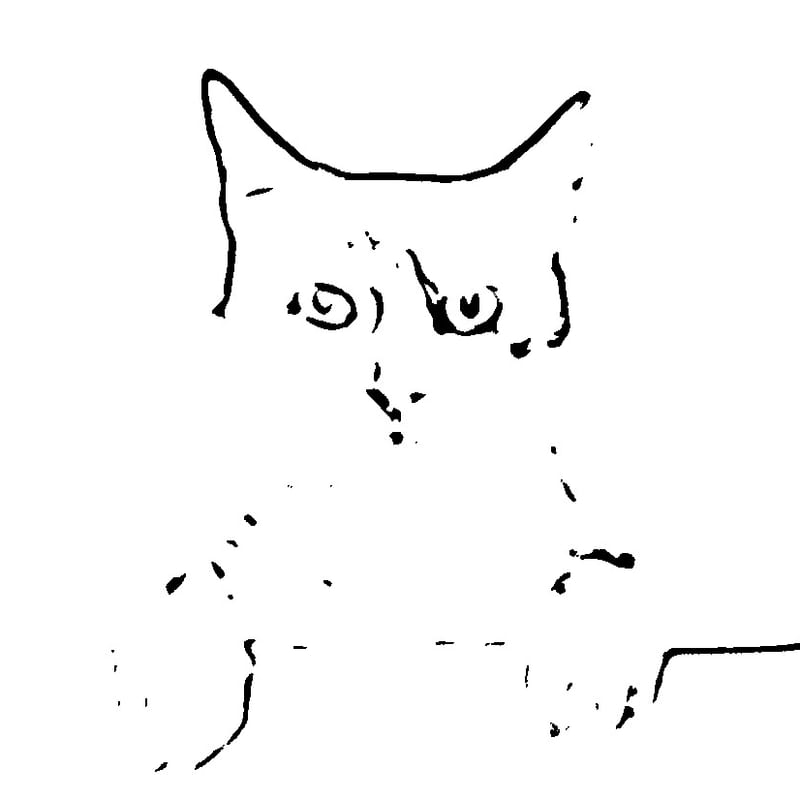
Free photo to coloring page generator. Turn any photo into a custom coloring page for kids or adults. Convert family photos, pet pictures into clean printable outlines. One-click A4 print. No sign-up, 100% private.

Drag & drop your image here

or

Browse Files

JPG, PNG, WebP, HEIC — Max 10MB

Loading image engine...

Loading image engine (~8MB, cached after first load)...

Privacy GuaranteedNo Server Uploads100% Client-Side

Photo to Coloring Page Free

Free photo to coloring page generator. Turn any photo into a custom coloring page for kids or adults. Convert family photos, pet pictures into clean printable outlines. One-click A4 print. No sign-up, 100% private.

Create Custom Printable Coloring Pages from Family Photos with our free online generator. Transform any photograph into clean, printable line art that children and adults can color in with crayons, colored pencils, or markers.

The Therapeutic Benefits of Coloring

Coloring is far more than a childhood pastime. Over the past two decades, a growing body of research has explored its effects on mental health and emotional regulation. A frequently cited 2005 study by Nancy Curry and Tim Kasser found that participants who colored structured geometric patterns — mandalas and plaid designs — experienced measurable reductions in anxiety compared to those who colored on blank paper or sat quietly. The structured nature of the activity appears to be important: following defined boundaries focuses attention inward, producing a state that psychologists compare to meditation. More recent studies have corroborated these findings across different age groups. Art therapists now routinely recommend coloring as a low-barrier entry point for clients who feel intimidated by open-ended artistic expression. The repetitive hand movements, the focused attention on staying within boundaries, and the gradual emergence of a completed image all contribute to a calming feedback loop that interrupts ruminative thought patterns.

A Brief History of Coloring Books

The first known publication resembling a modern coloring book was The Little Folks Painting Book, published in the 1870s by McLoughlin Brothers in New York. Early coloring books were explicitly educational, teaching children about geography, natural history, and moral lessons. Throughout the twentieth century, coloring books became a staple of childhood entertainment, featuring licensed characters from comics, television, and film. The medium experienced a remarkable cultural shift around 2013 when Scottish illustrator Johanna Basford published Secret Garden, an intricate coloring book designed specifically for adults. It sold millions of copies worldwide and launched an industry of adult coloring books covering everything from architectural details to botanical illustrations to abstract patterns. The adult coloring trend was not merely a fad — it reflected a genuine appetite for screen-free, meditative activities. Today, coloring has established itself as a legitimate creative and therapeutic pursuit for people of all ages.

The Neuroscience Behind Coloring and Relaxation

When you sit down to color, several things happen in your brain simultaneously. The activity engages the frontal lobe (organization, color choices, planning), the parietal lobe (hand-eye coordination, spatial awareness), and the occipital lobe (color perception and visual processing). By engaging multiple brain regions in a low-stakes creative task, coloring reduces activity in the amygdala — the brain's fear and stress center. Some researchers have drawn parallels to the psychological concept of "flow" described by Mihaly Csikszentmihalyi: a state of complete immersion in an activity that is challenging enough to hold attention but not so difficult as to cause frustration. Coloring sits in a sweet spot for many people — it requires just enough concentration to displace anxious thoughts without demanding artistic skill or creative decision-making.

How the Line Art Algorithm Is Tuned for Coloring Output

Not all line art conversion is suitable for coloring pages. A standard edge detection algorithm might produce thin, broken lines surrounded by gray noise — usable as a sketch but frustrating to color. Our algorithm is specifically calibrated for coloring page output in several important ways. First, the adaptive thresholding parameters are set to produce bold, continuous contour lines rather than delicate sketchy strokes. The algorithm analyzes local contrast across small regions of the image, ensuring that important edges are captured even in areas with subtle tonal differences. Second, aggressive noise suppression eliminates the gray speckles and artifacts that would otherwise appear in background areas and flat regions. The result is pure white fill zones bounded by unbroken black lines — exactly what you need for clean, satisfying coloring. Third, morphological operations are applied to close small gaps in contour lines, ensuring that each colorable region is fully enclosed. This prevents the frustrating experience of coloring through a gap into an adjacent region.

Choosing Photos for Different Age Groups

The source photograph you select has a significant impact on the resulting coloring page's difficulty and appeal. For toddlers and preschool children (ages two to five), choose photos with one large, simple subject — a single flower, a pet's face filling most of the frame, or a piece of fruit. The resulting coloring page will have just a few large regions to fill, which matches developing motor skills. For elementary school children (ages six to ten), photos with moderate complexity work well — a house with a garden, a group of animals, a street scene with a few buildings. These produce coloring pages with medium-sized regions and enough detail to be interesting without being overwhelming. For older children, teenagers, and adults, highly detailed photographs create intricate coloring pages that can occupy hours. Architectural photographs, dense floral arrangements, forest scenes, and detailed portraits all produce complex, engaging coloring pages.

Understanding Complexity Levels with the Intensity Slider

The Intensity slider gives you direct control over how much detail from the original photograph appears in the coloring page. At lower settings, only the strongest edges are captured, producing simple outlines with large, easy-to-color regions. This is ideal for young children or for creating quick, bold coloring pages. At medium settings, more detail emerges — secondary contours, facial features, texture boundaries — creating a moderately detailed page suitable for most age groups. At higher settings, fine details like individual leaves, fabric patterns, and subtle shading boundaries are captured, resulting in highly intricate coloring pages that challenge even dedicated adult colorists. Experiment with different intensity levels on the same photograph to create a series of coloring pages with graduated difficulty.

The Eraser Tool for Cleanup

Photographs contain a great deal of visual information, and not all of it belongs in a coloring page. A family photo might have a cluttered background, distracting power lines, or complex textures on clothing that convert into messy, hard-to-color regions. The built-in Eraser tool lets you selectively remove these unwanted elements directly on the converted image. Simply paint over any area you want to turn into clean white space. This is particularly useful for simplifying backgrounds, removing small artifacts, and cleaning up areas where the algorithm captured too much detail. The eraser is essential for creating polished, professional-quality coloring pages from everyday photographs.

Paper and Printing Considerations

The quality of your printed coloring page depends significantly on your paper choice and printer settings. Standard copy paper (75-80 gsm) works adequately for crayons and colored pencils, but markers and watercolor pencils will bleed through. For marker-friendly coloring pages, use cardstock (120-160 gsm) or paper specifically marketed for markers. If you plan to use watercolor pencils or water-based techniques, look for mixed-media paper with at least 160 gsm weight. When printing, set your printer to its highest quality mode and select "actual size" rather than "fit to page" to maintain the correct proportions. The A4 and Letter paper presets in the tool automatically crop and scale your image to fit standard paper sizes perfectly, eliminating guesswork about margins and proportions.

Coloring Medium Comparison

Different coloring tools produce distinctly different results, and each has its own strengths. Crayons are the classic choice for young children — they are non-toxic, inexpensive, and forgiving. They produce a waxy, textured finish that works well on standard paper. Colored pencils offer much more control and precision. They can be layered, blended, and sharpened to a fine point for detailed work. Prismacolor Premier and Faber-Castell Polychromos are popular choices among adult colorists for their smooth pigment and wide color ranges. Markers — particularly alcohol-based markers like Copic or Ohuhu — produce vibrant, even coverage with smooth blending between colors, but they require heavier paper to prevent bleeding. Water-based markers like Tombow Dual Brush Pens offer rich color with less bleed-through. Watercolor pencils bridge the gap between drawing and painting: you can apply dry color and then blend with a wet brush to create soft, painterly effects. Each medium interacts differently with the bold black lines of a coloring page, so consider experimenting to find your preferred combination.

Creating Themed Coloring Books

One of the most rewarding applications of photo-to-coloring-page conversion is assembling custom themed coloring books. You might create a "family vacation" coloring book using photos from a trip, a "garden flowers" book from photos of your own garden, or a "neighborhood walk" book featuring local architecture and streetscapes. To create a cohesive book, process all photos at the same intensity setting and use the same paper preset. Print the pages, arrange them in order, and bind them with staples, a three-hole punch and binder rings, or saddle-stitch binding. These make exceptionally personal gifts — grandparents particularly appreciate coloring books featuring their grandchildren's photos.

Educational Coloring Pages from Real Photos

Converting real photographs into coloring pages has significant educational potential. Biology teachers can create coloring pages from photographs of cells, organisms, and anatomical structures. Geography educators can convert satellite images and landscape photographs into colorable maps and terrain studies. History teachers can transform photographs of historical artifacts and architecture into engaging classroom activities. The act of coloring a subject requires students to observe details they might otherwise overlook — the number of petals on a flower, the architectural features of a building, the proportions of an animal's body. This observational engagement makes coloring a surprisingly effective learning tool.

Accessibility Considerations

When creating coloring pages for groups that include individuals with visual impairments or fine motor challenges, certain adjustments help. Increase the line weight to produce thicker, more visible boundaries. Keep the intensity low to create simpler pages with larger regions. For individuals with limited hand strength or dexterity, larger coloring regions and thicker lines reduce frustration. Printing on off-white or cream paper rather than bright white can reduce glare for people with light sensitivity. These considerations also apply to coloring activities in senior care settings, where bold, simple designs with clear boundaries are most appreciated.

Custom Coloring Pages as Party Activities

Personalized coloring pages make excellent party activities for children's birthday parties, family reunions, holiday gatherings, and classroom celebrations. For a birthday party, convert photos of the birthday child, their favorite pet, or the party theme into coloring pages. Print enough copies for each guest and set up a coloring station with a variety of supplies. For holiday celebrations, convert seasonal photos — autumn leaves, decorated trees, fireworks, spring flowers — into themed coloring pages. For classroom use, convert photos related to the current unit of study. The personal connection to real photographs makes these coloring pages more engaging than generic alternatives.

Seasonal and Holiday Coloring Page Ideas

Every season offers rich photographic material for coloring pages. Spring brings flowers, baby animals, gardens, and rain scenes. Summer offers beach landscapes, outdoor activities, ice cream, and fireworks. Autumn provides stunning foliage, pumpkins, harvest scenes, and Halloween decorations. Winter delivers snowscapes, holiday decorations, cozy indoor scenes, and winter wildlife. Religious and cultural holidays offer their own imagery — convert photos of decorated eggs, menorahs, lanterns, rangoli, or any culturally significant object into coloring pages that help children engage with traditions in a hands-on way.

You can also explore related creative tools like our [line art converter](/en/line-art) for general illustration or our [cross-stitch pattern maker](/en/cross-stitch) for converting photos into needlework patterns.

All processing happens entirely in your browser using WebAssembly technology — your family photos remain completely private and are never uploaded to any server. No watermarks, no sign-up, free to use forever.

How to Use

  1. Drag & drop or browse to upload any image. Supports JPG, PNG, and WebP.
  2. Pick from 19 specialized sketch styles — from pencil drawings to laser-ready files.
  3. Get your result in seconds. No sign-up, no watermark, no limits.

Key Features

  • 100% Client-Side
  • Privacy Guaranteed
  • No Sign Up Required
  • Free Forever
  • Instant Results

Frequently Asked Questions

What kind of photos work best for coloring pages?
Photos with clear subjects, good contrast, and simple backgrounds produce the best coloring pages. Portraits, animals, flowers, and objects with distinct outlines work great.
Can I print the coloring page on A4 paper?
Yes! Our tool includes a built-in Print button with A4 and Letter paper presets. One click and your coloring page is ready to print — no extra software needed.
Is this coloring page generator safe for children?
Absolutely! No sign-up is required, no data is collected, and all processing happens offline in your browser. Parents can safely use it with children — just upload a family photo and create a fun coloring page together.
Are the coloring pages suitable for all ages?
Yes! Use the intensity slider to control detail level. Lower intensity creates simpler outlines perfect for young children (ages 3-6). Higher intensity captures more detail for older kids and adults who enjoy intricate coloring. You choose the photo, so the content is always age-appropriate.

Related Articles

Related Tools