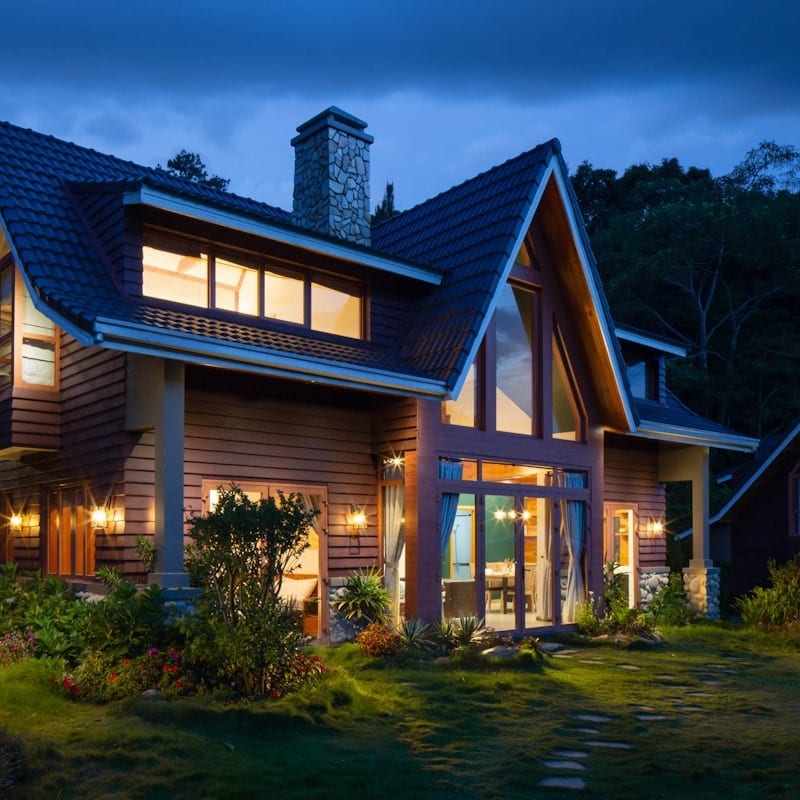
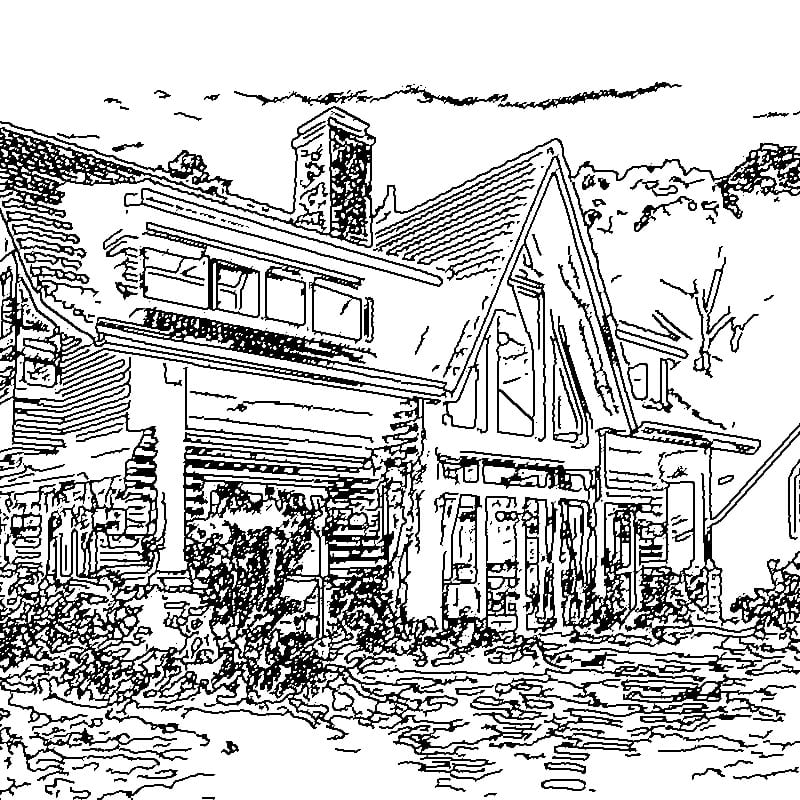
Why Sketch-Style Presentation Stands Out in Real Estate Listings: When a potential buyer scrolls through property listings online, they encounter an endless stream of photographs — most of them taken with wide-angle lenses under artificial lighting, looking more or less identical from one listing to the next. A sketch-style image breaks this visual monotony immediately. The human eye is drawn to it precisely because it looks different. But the appeal goes deeper than novelty. A sketch of a building emphasizes its architectural character — the proportions of the facade, the rhythm of the windows, the pitch of the roof, the relationship between mass and void. These are the qualities that give a building its identity, and they are often lost in photographs that capture too much incidental detail. Real estate agents who incorporate architectural sketches into their marketing materials report that listings receive more engagement, more saves, and more inquiries. The sketch functions as a signal: this property has architectural merit worth examining.
The Canny Edge Detection Algorithm and How It Extracts Architectural Features: The technical foundation of this conversion tool is the Canny edge detection algorithm, developed by John Canny in 1986 and still considered one of the most effective edge detection methods in computer vision. The algorithm operates in several stages. First, the image is smoothed with a Gaussian filter to reduce noise — this prevents the algorithm from detecting texture and grain as edges. Next, the intensity gradient of the image is computed, identifying areas where brightness changes sharply. Non-maximum suppression then thins these gradients to single-pixel-wide lines. Finally, hysteresis thresholding applies two threshold values: pixels above the high threshold are confirmed as edges, pixels below the low threshold are discarded, and pixels between the two thresholds are kept only if they connect to a confirmed edge. This two-threshold approach is what gives Canny edge detection its characteristic ability to produce clean, continuous contour lines while ignoring noise. For architectural photography, this means the algorithm naturally emphasizes the strong, straight edges of building structures — wall edges, window frames, rooflines, door openings, column profiles — while suppressing the softer gradients of sky, lawn, and ambient texture.
Dual Output Modes — Traditional Sketch and Inverted Blueprint: This tool offers two distinct visual output modes. The default mode produces black lines on a white background, mimicking a traditional pencil or ink sketch on paper. This is the most versatile format — it works in printed brochures, digital listings, social media posts, and presentation decks. The inverted mode reverses this relationship, producing white lines on a dark background. This mimics the appearance of a traditional architectural blueprint, which historically used white lines on blue paper produced through the cyanotype process. The blueprint look carries strong associations with professional architecture and construction, lending the image an air of technical authority. Many agents use the blueprint mode for luxury property marketing, where the technical aesthetic communicates precision and quality construction. Both modes are produced from the same edge detection data, so the level of detail is identical — only the visual presentation differs.
Watermark Functionality for Professional Branding
In real estate marketing, brand recognition matters. When your architectural sketches circulate on social media, appear in shared listing emails, or get saved to Pinterest boards, a subtle watermark ensures that your agency name travels with the image. The watermark feature allows you to add text — your company name, website URL, or agent name — as a semi-transparent overlay on the output image. The watermark is positioned to be visible but not distracting, protecting your creative work while maintaining the aesthetic quality of the sketch.
Photographing Buildings for the Best Conversion Results
The quality of the output sketch depends heavily on the quality and composition of the source photograph. Here are the key factors to consider. Angle: shoot the building as straight-on as possible, minimizing perspective distortion. When a camera is tilted upward to capture a tall building, vertical lines converge, and the edge detection algorithm will faithfully reproduce these converging lines, which can look awkward in a sketch. If perspective correction is not possible in-camera, use your phone or computer's built-in photo editor to correct verticals before uploading. Lighting: the best time to photograph buildings for sketch conversion is during the golden hour — the hour after sunrise or before sunset — when low-angle sunlight creates strong shadows that define architectural details. Overcast days produce flat, even lighting that reduces the contrast between surfaces, making it harder for the algorithm to distinguish edges. A clear sky is preferable to a cloudy one, since cloud texture can produce unwanted marks in the sketch. Distance: stand far enough back to capture the entire building without extreme wide-angle distortion, but close enough that architectural details are clearly resolved.
Interior vs Exterior Conversion Considerations
Exterior photographs of buildings generally produce the cleanest sketches because building facades present strong, geometric edges against a relatively simple sky background. Interior photographs present a different set of challenges. Rooms contain many more objects and surfaces at varying distances, and the lighting is often more complex with multiple sources and mixed color temperatures. For interior shots, the best approach is to choose angles that emphasize the room's architectural features — built-in shelving, fireplace surrounds, window frames, ceiling details — rather than furniture and decor. Rooms with clean, modern aesthetics convert more successfully than cluttered, heavily decorated spaces. Wide-angle interior shots that show wall-to-wall and floor-to-ceiling tend to produce the most satisfying sketches, as they capture the spatial geometry of the room.
Using Architectural Sketches in Marketing Materials
The sketch output from this tool is a high-resolution PNG file that can be used directly in virtually any marketing context. In printed brochures, a full-page architectural sketch makes a striking cover or section opener. On social media platforms like Instagram and Facebook, sketch-style images consistently outperform standard photography in engagement metrics because they stand out in the feed. For listing presentations delivered as PDF or PowerPoint files, pairing a photograph with its sketch equivalent creates a compelling before-and-after visual. Some agents use sketches on business cards, letterheads, and email signatures to reinforce their brand identity. The clean black-and-white aesthetic also makes sketches ideal for newspaper and magazine advertisements where color printing may be unavailable or expensive.
Before-and-After Renovation Visualization
One powerful application of architectural sketches in real estate is renovation visualization. When marketing a property that needs work, or when presenting a renovation plan to a buyer, sketches can communicate the transformation without the expense of a full 3D rendering. Convert a photograph of the property's current state into a sketch, then use the sketch as a basis for hand-drawn or digitally overlaid renovation concepts. The sketch format naturally invites this kind of creative modification — it reads as a proposal or concept rather than a finished product, setting appropriate expectations while sparking imagination.
How Different Architectural Styles Convert
Not all buildings convert equally well into sketches, and understanding why helps you choose the best properties and angles for conversion. Modern minimalist architecture, with its clean lines, flat surfaces, and geometric simplicity, produces extremely clean, elegant sketches — the algorithm captures the essential form with very few lines, resulting in images that look almost like intentional architectural drawings. Victorian and Edwardian buildings, with their ornate trim, bay windows, decorative brackets, and complex rooflines, produce richly detailed sketches full of character, though the sheer density of detail may require adjusting the intensity slider to avoid visual clutter. Colonial architecture, with its symmetrical facades and regular window placement, converts beautifully and produces balanced, harmonious sketches. Art Deco buildings, with their bold geometric ornamentation and stepped facades, are particularly well-suited to sketch conversion — the strong geometric patterns that define the style are exactly the kind of features the edge detection algorithm excels at capturing.
The Impact of Architectural Sketches on Buyer Engagement
Research in real estate marketing consistently shows that listings with distinctive visual content receive more views, longer viewing times, and more inquiries than those with standard photography alone. Architectural sketches contribute to this effect in several ways. They signal that the agent has invested thought and effort in the listing presentation, which buyers interpret as a signal of the property's quality. They emphasize the architectural features of the property rather than its furnishings, which helps buyers envision their own life in the space. And they create an emotional response — the warmth and artistry of a sketch triggers a different reaction than the clinical precision of a photograph.
Printing and Display Considerations
When printing architectural sketches for physical marketing materials, the clean black-and-white nature of the output makes production straightforward. The images print beautifully on any paper stock, from standard copy paper for handouts to premium card stock for brochures. For large-format printing — lobby displays, open house signage, or framed presentation pieces — the high-resolution PNG output scales well, though for very large prints you may want to use a vector tracing tool to convert the raster output into scalable vector format. Framed architectural sketches of notable properties also make excellent office decor for real estate agencies, reinforcing the firm's connection to the local architectural landscape.
Comparison with Professional Architectural Illustration Services: Commissioning a professional architectural illustrator to produce a hand-drawn rendering of a property typically costs several hundred to several thousand dollars and takes days or weeks to complete. This tool produces results in seconds at no cost. The output is not identical to what a skilled illustrator would produce — a human artist brings interpretation, selective emphasis, and artistic judgment that an algorithm cannot replicate. However, for the vast majority of real estate marketing applications, the automated sketch output is more than sufficient. The speed and zero cost mean you can produce sketches for every property in your portfolio, not just the premium listings that justify a significant illustration budget. For agents who want to explore other creative presentation styles, our line art converter and vintage engraving effect offer alternative artistic treatments.
Using Sketches in Property Appraisals and Historical Documentation: Beyond marketing, architectural sketches serve valuable roles in property appraisals and historical documentation. Appraisers sometimes include sketch-style images in their reports to highlight the architectural features that contribute to a property's value — particularly for historically significant buildings where the architecture itself is a key value driver. Historical preservation organizations use architectural sketches to document building facades for their records, since the sketch format emphasizes the structural and decorative elements that define a building's historical character while stripping away transient details like signage, vehicles, and vegetation that change over time.
All image processing runs entirely in your browser — client property photos are never uploaded to any server. Free, instant, and completely private.